Project
Building an Annual Impact Reporting Practice
Organization: Coforma
Date: 2024–2026
Formats: Web report, accessible PDF, social campaign, email distribution, internal video, external video, executive interviews, multimedia storytelling
Relevant skills: Content strategy, executive interviews, video production, web publishing, campaign distribution, stakeholder management, performance reporting
Date: 2024–2026
Formats: Web report, accessible PDF, social campaign, email distribution, internal video, external video, executive interviews, multimedia storytelling
Relevant skills: Content strategy, executive interviews, video production, web publishing, campaign distribution, stakeholder management, performance reporting
Executive Summary
Coforma did not need another year-end summary. It needed a way to recover the meaning of a year’s work from an organization where evidence lived in different places: project outcomes, delivery artifacts, metrics, leadership reflections, and the expertise of people spread across disciplines.
Across two reporting cycles, I helped build that retrieval and storytelling system. I carried primary responsibility for the day-to-day strategy and production of the 2025 Impact Report, which brought the practice to its fullest expression: a public web report, accessible PDF, internal and external videos, social campaign, email distribution, and a process that could be used again rather than reinvented the following year.
Across two reporting cycles, I helped build that retrieval and storytelling system. I carried primary responsibility for the day-to-day strategy and production of the 2025 Impact Report, which brought the practice to its fullest expression: a public web report, accessible PDF, internal and external videos, social campaign, email distribution, and a process that could be used again rather than reinvented the following year.
Core Problem
Coforma had no shortage of work worth sharing. The difficulty was finding it, verifying it, and arranging it into something an outsider could understand.
The company’s work crossed civic technology, healthcare, accessibility, public benefits, responsible AI, service design, and digital product delivery. The people closest to that work naturally understood it through the language of their projects and disciplines. An impact report, however, had to reveal the connections among those efforts without reducing them to a list of accomplishments or a layer of polished corporate language.
Without a repeatable practice, every reporting cycle risked becoming an exercise in organizational archaeology: locating the right people, resurfacing forgotten examples, confirming numbers, reconciling different accounts, and deciding which details mattered beyond the team that produced them. The underlying problem was not simply content production. It was organizational memory.
The company’s work crossed civic technology, healthcare, accessibility, public benefits, responsible AI, service design, and digital product delivery. The people closest to that work naturally understood it through the language of their projects and disciplines. An impact report, however, had to reveal the connections among those efforts without reducing them to a list of accomplishments or a layer of polished corporate language.
Without a repeatable practice, every reporting cycle risked becoming an exercise in organizational archaeology: locating the right people, resurfacing forgotten examples, confirming numbers, reconciling different accounts, and deciding which details mattered beyond the team that produced them. The underlying problem was not simply content production. It was organizational memory.
Strategic Approach
I treated the report as both an editorial product and a piece of communications infrastructure.
The editorial question was:
How do we show Coforma’s impact in a way that feels specific, credible, and human?
I studied impact reports from organizations in civic technology, digital services, philanthropy, and mission-driven consulting—not to copy their formats, but to understand the conventions of the category and where they failed. I looked at narrative structure, evidence, visual treatment, audience, distribution, and the balance between institutional accomplishments and the people affected by the work.
That research led to several decisions. The report would lead with stories rather than a wall of metrics. It would foreground the people and public missions behind the work. It would be designed for several audiences at once, including employees, partners, prospective clients, recruits, and industry peers. It would also exist in multiple forms because no single format could carry the entire story.
Most importantly, the work could not begin and end with a published artifact. Each cycle needed to leave behind a better method for finding stories, involving subject-matter experts, validating claims, and producing the next report with less friction.
The editorial question was:
How do we show Coforma’s impact in a way that feels specific, credible, and human?
I studied impact reports from organizations in civic technology, digital services, philanthropy, and mission-driven consulting—not to copy their formats, but to understand the conventions of the category and where they failed. I looked at narrative structure, evidence, visual treatment, audience, distribution, and the balance between institutional accomplishments and the people affected by the work.
That research led to several decisions. The report would lead with stories rather than a wall of metrics. It would foreground the people and public missions behind the work. It would be designed for several audiences at once, including employees, partners, prospective clients, recruits, and industry peers. It would also exist in multiple forms because no single format could carry the entire story.
Most importantly, the work could not begin and end with a published artifact. Each cycle needed to leave behind a better method for finding stories, involving subject-matter experts, validating claims, and producing the next report with less friction.
Solution & Execution
I was the primary day-to-day driver of the 2025 effort, working across research, editorial development, stakeholder coordination, production, publishing, and distribution.
I identified the information we needed, gathered inputs from leadership and delivery teams, interviewed executives and subject-matter experts, reviewed supporting materials, and worked to turn project-specific language into stories that could travel beyond the people already familiar with the work. I partnered with a writer and designer while also handling much of the connective labor that kept the project moving: clarifying gaps, preparing interviewees, validating proof points, resolving feedback, building web pages, and preparing content for publication.
The video became the project’s center of gravity. It needed to hold perspectives from approximately half a dozen company leaders, along with material gathered from staff and subject-matter experts, without feeling like a sequence of executive testimonials.
I wrote the script, selected and prepared interview subjects, recorded virtual interviews, filmed b-roll in person, researched and sourced supporting assets, and edited the final piece. The work was less about collecting polished statements than helping people move past abstract organizational language. In interviews, I pushed for moments, consequences, tensions, and examples—the details that allow an audience to understand why the work mattered.
The goal was not a highlight reel. It was to make a complicated, cross-disciplinary year legible and give the company a story in which its own people could recognize themselves.
I identified the information we needed, gathered inputs from leadership and delivery teams, interviewed executives and subject-matter experts, reviewed supporting materials, and worked to turn project-specific language into stories that could travel beyond the people already familiar with the work. I partnered with a writer and designer while also handling much of the connective labor that kept the project moving: clarifying gaps, preparing interviewees, validating proof points, resolving feedback, building web pages, and preparing content for publication.
The video became the project’s center of gravity. It needed to hold perspectives from approximately half a dozen company leaders, along with material gathered from staff and subject-matter experts, without feeling like a sequence of executive testimonials.
I wrote the script, selected and prepared interview subjects, recorded virtual interviews, filmed b-roll in person, researched and sourced supporting assets, and edited the final piece. The work was less about collecting polished statements than helping people move past abstract organizational language. In interviews, I pushed for moments, consequences, tensions, and examples—the details that allow an audience to understand why the work mattered.
The goal was not a highlight reel. It was to make a complicated, cross-disciplinary year legible and give the company a story in which its own people could recognize themselves.

Deliverables
- Public-facing web impact report
- Downloadable accessible PDF
- Internal video presented at a company-wide All Hands
- External video for public and partner-facing use
- Coordinated social campaign
- Email/newsletter distribution
- Channel-specific promotional copy
- Performance reporting
- Documented workflow for future reporting cycles
Impact
The clearest external signals were encouraging. Social posts connected to the report performed above Coforma’s average, and the public video was reused in multiple settings rather than disappearing after launch.
The internal response mattered more to me. Staff and leadership received the video especially well because it reflected the year back to them in a form they had not experienced while doing the work. People who had been absorbed in individual projects could see how their contribution related to the company’s broader purpose.
The project also improved the machinery behind the storytelling. After two cycles, Coforma had a clearer annual rhythm, a stronger method for gathering stories and metrics, and a better understanding of where reporting work tends to stall. The result was not only a set of finished assets. It was greater organizational capacity to identify and communicate impact.
The internal response mattered more to me. Staff and leadership received the video especially well because it reflected the year back to them in a form they had not experienced while doing the work. People who had been absorbed in individual projects could see how their contribution related to the company’s broader purpose.
The project also improved the machinery behind the storytelling. After two cycles, Coforma had a clearer annual rhythm, a stronger method for gathering stories and metrics, and a better understanding of where reporting work tends to stall. The result was not only a set of finished assets. It was greater organizational capacity to identify and communicate impact.
Why This Project Matters
This project changed how I think about impact reporting.
A good report does more than prove value to an external audience. It gives an organization a chance to notice patterns that are difficult to see from inside daily delivery. It can connect teams that use different vocabularies, preserve work that might otherwise fade from memory, and show employees how their individual effort belongs to a larger story.
The 2025 report brought together nearly every part of my practice: research, editorial judgment, interviewing, story coaching, writing, video production, web publishing, distribution, measurement, and cross-functional leadership. But the part I value most is less visible. I built a way for a complex organization to find its own stories—and then helped it recognize itself in the result.
A good report does more than prove value to an external audience. It gives an organization a chance to notice patterns that are difficult to see from inside daily delivery. It can connect teams that use different vocabularies, preserve work that might otherwise fade from memory, and show employees how their individual effort belongs to a larger story.
The 2025 report brought together nearly every part of my practice: research, editorial judgment, interviewing, story coaching, writing, video production, web publishing, distribution, measurement, and cross-functional leadership. But the part I value most is less visible. I built a way for a complex organization to find its own stories—and then helped it recognize itself in the result.

Select projects

Honor the Air, Land, and Water — event-led, social-first, documentary storytelling
Building an Annual Impact Reporting Practice — multimedia content system and executive storytelling

Humans of Public Service — interview-driven public-service video series
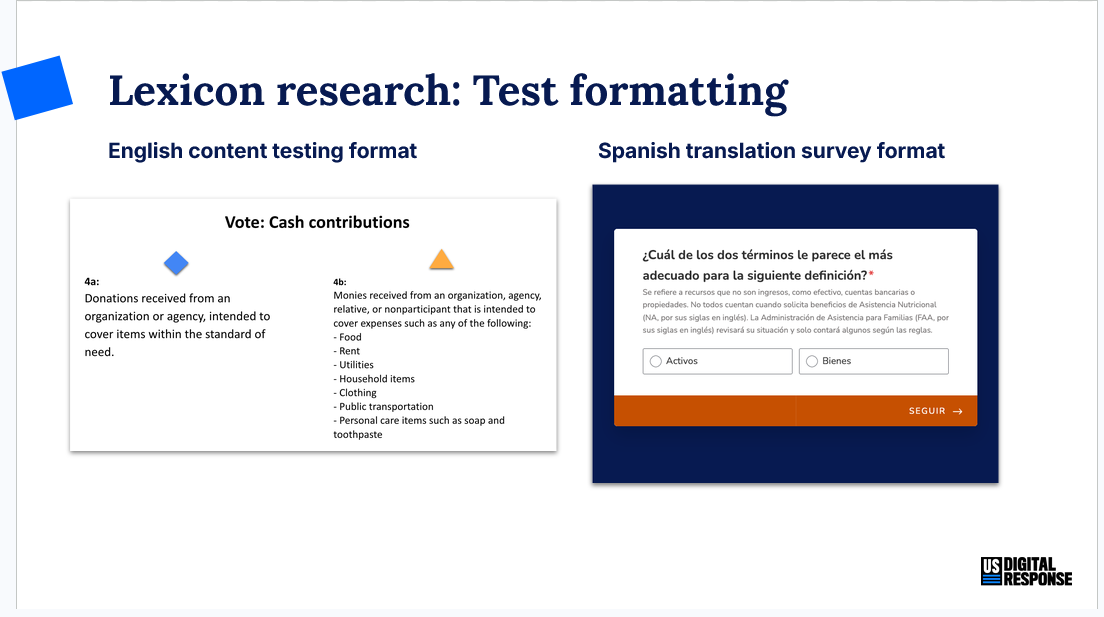
Scaling Language Access With AI — public benefits, AI, language access, content strategy